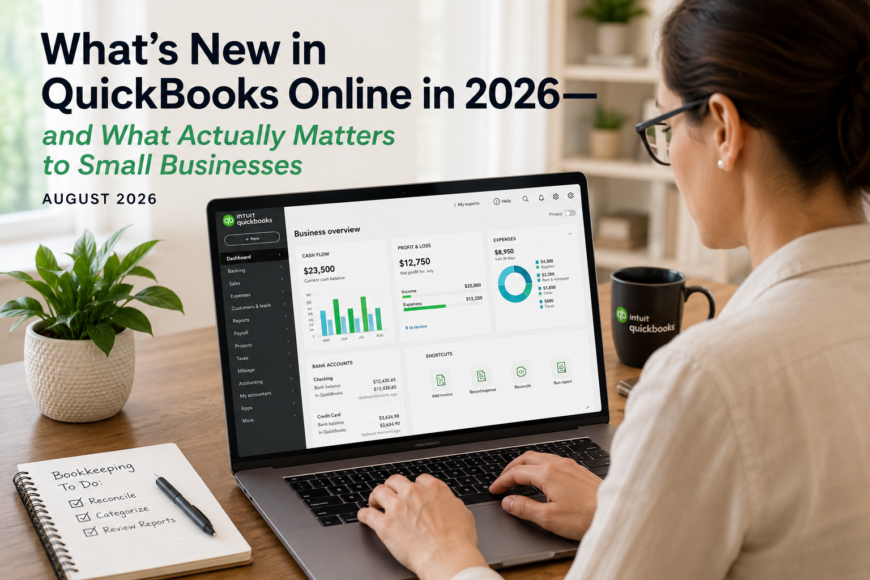
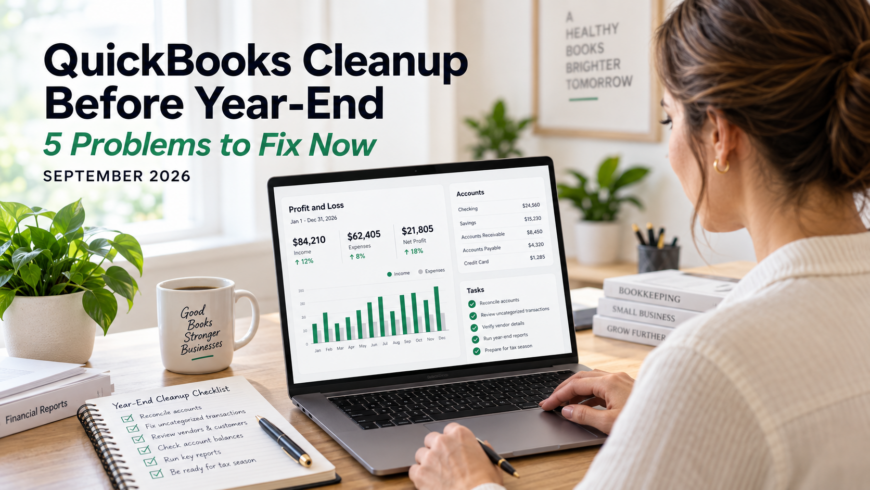
monthly bookkeeping services helping a small business owner review QuickBooks reports

Monthly Bookkeeping Services: Spring Clean Your Books Before Tax Season

Running a small business feels easier when you understand your numbers. That is exactly what monthly bookkeeping services give you. When you spring clean your books before tax season, you cut stress, avoid last‑minute surprises, and base decisions on real data instead of guesses.

Why Monthly Bookkeeping Services Matter in March

March is a good month to catch up and reset your books for the year. Instead of waiting for tax time and digging through old receipts, you keep your QuickBooks file current each month. With monthly bookkeeping services, your records stay organized and your CPA gets clean numbers to work with.

When you do this, you can:

  • See if your business is profitable right now.
  • Spot cash flow issues before they become crises.
  • Make tax preparation faster and easier.
  • Use your Profit & Loss and Balance Sheet as tools instead of surprises.

How Monthly Bookkeeping Services Clean Up QuickBooks

Think of your QuickBooks file like your office. If no one maintains it, clutter builds up. Monthly bookkeeping services give your books a regular cleanup so you can focus on clients and operations instead of transactions.

Most monthly bookkeeping packages include:

  • Bank and credit card reconciliations every month.
  • Accurate income and expense categorization.
  • A review of odd or duplicate transactions.
  • Monthly Profit & Loss and other key reports.
  • Simple cash flow checks so tight months do not surprise you.

At Emerald Consulting, QuickBooks experts structure your file the right way from the start. You see reports that match how your business actually runs, not just default screens in the software.

QuickBooks Plus Monthly Bookkeeping: A Strong Combo

QuickBooks is powerful, but software alone does not keep books clean. When you pair QuickBooks with monthly bookkeeping services, you get clear data plus expert oversight.

This combo helps you:

  • Use a chart of accounts that fits your industry.
  • Keep recurring invoices, bills, and subscriptions handled on time.
  • View reports that highlight what matters most to you.
  • Get plain‑English answers to “what do these numbers mean?”

If you haven’t reviewed your QuickBooks setup in a while, March is a smart time to do that along with your monthly bookkeeping routine.

Simple March Action Plan

If your books feel behind or confusing, you are not alone. Many owners delay bookkeeping because they are busy, but that delay makes everything harder later.

Use this simple March plan:

  1. Decide to use monthly bookkeeping services going forward.
  2. Reconcile all open months in QuickBooks so balances match your bank.
  3. Clean up any “uncategorized” or “miscellaneous” entries.
  4. Schedule a short monthly review to look at your key reports.

Emerald Consulting offers remote bookkeeping and QuickBooks services so you can get expert support without hiring a full‑time bookkeeper. If you are ready to spring clean your books, you can reach our team through the contact page on our website.

Monthly bookkeeping services dashboard showing small business financial reports

Love Your Numbers: How Monthly Bookkeeping Saves Your Business

Monthly Bookkeeping Services: Why Consistency Saves Small Businesses

Monthly bookkeeping services give small business owners something priceless: clarity. When your books are updated and reconciled every month, you stop guessing and start leading with real numbers.

Too many businesses wait until tax season to think about bookkeeping. That delay creates errors, missed deductions, cash flow confusion, and higher accounting costs. Monthly bookkeeping services prevent those problems before they grow.

What Monthly Bookkeeping Services Include

Professional monthly bookkeeping services typically cover:

  • Bank and credit card reconciliations
  • Accurate transaction categorization
  • Review of income and expenses
  • Monthly Profit and Loss reports
  • Cash flow monitoring
  • Clean, organized financial records

When this happens consistently, your reports become tools—not surprises.

Why Small Businesses Need Monthly Bookkeeping

Small businesses operate on tighter margins. That means small financial mistakes have bigger consequences.

With consistent monthly bookkeeping:

  • You know if you’re profitable now—not six months later
  • Cash flow issues are spotted early
  • Tax preparation becomes smoother
  • Financial decisions are based on facts

If you’re already using QuickBooks, monthly bookkeeping ensures the system is accurate and working correctly. Software alone doesn’t guarantee clean books—oversight does.

The IRS recommends maintaining organized, up-to-date financial records year-round, not just during filing season (see IRS small business recordkeeping guidelines).

The Cost of Skipping Monthly Bookkeeping Services

When bookkeeping is delayed:

  • Cleanup costs increase
  • Errors multiply
  • Tax stress intensifies
  • Decision-making slows

Monthly bookkeeping services reduce those risks and create financial stability.

Emerald Consulting provides reliable, structured monthly bookkeeping support so business owners can focus on growth—not spreadsheets.

Monthly Bookkeeping FAQ

Q: Is monthly bookkeeping really necessary for small businesses?
A: Yes. Monthly bookkeeping helps catch errors early and provides up-to-date financial insight.

Q: What reports should I review each month?
A: At minimum, your Profit & Loss statement and reconciled bank balances.

Audrey Duke – 2025 QuickBooks ProAdvisor Award Winner | Emerald Consulting Inc.

Audrey Recognized with 2025 QuickBooks ProAdvisor Award

We’re excited to celebrate a major achievement—Audrey from Emerald Consulting INC has been named a 2025 QuickBooks ProAdvisor Award recipient!

This prestigious recognition honors top-tier QuickBooks professionals across the country who exemplify excellence, leadership, and dedication in the bookkeeping and accounting space. Audrey’s work ethic, technical expertise, and client-first approach have made her an invaluable part of the Emerald team—and this award is a well-deserved recognition of her impact.

Here’s why Audrey stands out:

✅ Deep expertise in QuickBooks Online and Desktop
✅ Reliable, responsive client support
✅ A sharp eye for detail and financial accuracy
✅ Dedication to continuous learning and best practices

We recently had the privilege of celebrating this milestone with her—and we’re excited to share the moment with you too!

Please join us in congratulating Audrey on this outstanding accomplishment. Her excellence helps keep Emerald Consulting INC a trusted name in modern bookkeeping solutions.

Optimizing Performance in QuickBooks Online

QuickBooks Online (QBO) is a powerful tool that helps businesses manage their finances with ease and efficiency. However, like any software, its performance can be optimized to ensure you’re getting the most out of its features. Here are some strategies to streamline your accounting processes and enhance your experience with QuickBooks Online.

1. Regularly Update Your Software

QuickBooks Online is continually updated with new features, security patches, and performance improvements. Ensuring that your software is always up to date can help you avoid bugs and take advantage of the latest enhancements. Set your account to update automatically or check for updates regularly to stay current.

2. Clean Up Your Data

Over time, your QuickBooks data file can become cluttered with unused accounts, old transactions, and outdated information. Regularly cleaning up your data can significantly improve performance. This includes merging duplicate accounts, archiving old data, and deleting unused list items. Use the built-in cleanup tools in QuickBooks to help maintain a lean, efficient data file.

3. Optimize Your Internet Connection

Since QuickBooks Online is cloud-based, a strong and stable internet connection is crucial for optimal performance. Ensure you have a high-speed internet connection and consider upgrading your bandwidth if you frequently experience slow performance. Close other applications and tabs that may be consuming bandwidth and affecting your QuickBooks experience.

4. Use Browser Best Practices

Your web browser plays a significant role in how well QuickBooks Online performs. Use a supported browser like Google Chrome or Mozilla Firefox, and keep it updated to the latest version. Clear your browser cache regularly to prevent data build-up, which can slow down performance. Additionally, using private or incognito mode can sometimes improve speed by eliminating the interference of browser extensions and cookies.

5. Streamline Your Workflow with Integrations

QuickBooks Online integrates with numerous third-party applications that can help automate and streamline various accounting tasks. Integrating your payroll, invoicing, and time-tracking systems with QuickBooks can reduce manual data entry, minimize errors, and save time. Explore the QuickBooks App Store to find tools that can enhance your workflow.

6. Customize Your Dashboard and Reports

Tailoring QuickBooks to fit your business needs can make navigation more intuitive and efficient. Customize your dashboard to display the most relevant information for your daily operations. Create and save customized reports that you frequently use, so you can quickly access the data you need without repetitive setup.

7. Train Your Team

Ensure that all team members who use QuickBooks Online are adequately trained on its features and best practices. Proper training can prevent user errors that slow down the system and lead to inaccurate data entry. Consider investing in QuickBooks Online training courses or consulting with a QuickBooks ProAdvisor to ensure your team is proficient.

8. Regularly Back Up Your Data

While QuickBooks Online automatically backs up your data, having your own backup plan adds an extra layer of security. Regularly exporting your data and storing it securely ensures you can quickly recover in the event of data loss or corruption.

By implementing these strategies, you can optimize the performance of QuickBooks Online and streamline your accounting processes. This will not only save time and reduce frustration but also ensure your financial data is accurate and up-to-date, enabling you to make better business decisions.

Elevate Your QuickBooks® Experience with Advanced Customization

Streamline Your Invoices
QuickBooks allows for comprehensive invoice customization, which can significantly streamline your billing process. Start by modifying the invoice templates to reflect your brand identity. Utilize custom fields to capture unique information specific to your business, such as customer IDs or project numbers. Moreover, integrating automated payment reminders can save you time and accelerate the payment process.

Enhance Your Reports for Better Insights
Customizing reports in QuickBooks goes beyond basic tweaks. To truly harness the power of your financial data, consider using advanced filters to focus on the metrics that matter most. Create custom reports that track key performance indicators (KPIs) like cash flow trends or customer acquisition costs. Share these insights by setting up automatic report sharing with your team or stakeholders, ensuring everyone stays informed and aligned.

Personalize Sales Receipts
Sales receipts customization can enhance customer experience and boost your brand’s visibility. Include your logo and use brand colors to maintain a consistent look across all customer touchpoints. Adding personalized messages or promotions on receipts can also increase customer engagement and encourage repeat business.

Utilize Add-Ons and Integrations
To further enhance your QuickBooks capabilities, explore add-ons and integrations. Tools like Salesforce or PayPal can integrate seamlessly, providing a more comprehensive view of your finances and customer interactions. These integrations can automate data entry and reduce errors, making your financial management more efficient and accurate.

Conclusion
By implementing these advanced QuickBooks customization techniques, you can optimize your financial management and achieve better alignment with your business goals. Take the time to explore these options and watch your business operations transform through more tailored, efficient, and insightful financial practices.

Financial advisor analyzing data on a tablet with QuickBooks Online charts, in a well-organized office setting.

7 Key Practices for Maximizing QuickBooks

Emerald Consulting is thrilled to share a comprehensive guide on the “7 Key Practices for Maximizing QuickBooks Online” with our valued clients and readers. As a leading accounting solution, QuickBooks Online brings a wealth of features to enhance your financial management. Our guide explores how to leverage QuickBooks Online for optimal efficiency and insight.

1. Customize for Clarity and Insight

QuickBooks Online offers advanced customization for invoices, reports, and sales receipts. By tailoring these to your business needs, you can improve clarity and gain valuable insights. Remember, integrating your logo and branding is key to professionalism and consistency.

2. Ensure Accuracy with Regular Reconciliation

Monthly reconciliation of bank and credit card accounts is crucial. This practice ensures your records are accurate, helping prevent fraud and discrepancies. Indeed, keeping your financials current is foundational for trustworthy management.

3. Embrace Cloud-Based Flexibility

With cloud storage, access your financial data anywhere, anytime. This flexibility is invaluable for remote work and staying informed about your financial status. It’s a core advantage for businesses aiming to maximize QuickBooks Online.

4. Streamline Through Automation

Automate recurring invoices and bill payments to save time and avoid missed payments. Automation supports steady cash flow and strong vendor relationships, essential for operational continuity.

5. Utilize Comprehensive Reporting

QuickBooks Online’s reporting tools allow for in-depth financial analysis. Regularly reviewing profit and loss statements and balance sheets is vital for data-driven decision-making. This practice is key to understanding your financial health.

6. Boost Efficiency with App Integration

Integrating with business apps can streamline operations. Identify apps that fit your business model, like CRM systems, to enhance financial and customer relationship management. This strategic approach can amplify QuickBooks Online’s benefits.

7. Commit to Comprehensive Training

Invest in training for you and your team. A deep understanding of QuickBooks Online’s features enables effective utilization. Tailored training meets your unique business needs, driving success.

Conclusion

Adopting these 7 practices can transform your financial management and operational efficiency. Emerald Consulting is committed to providing our clients with the tools and insights for financial mastery. With QuickBooks Online, you have a powerful ally in achieving your business goals.

APP INTEGRATION

Maximizing Efficiency: Integrating Apps with QuickBooks®

In today’s fast-paced business world, efficiency is not just a goal; it’s a necessity. One of the most effective ways to enhance efficiency is through the integration of apps with QuickBooks®, a leading accounting software. The latest apps that integrate with QuickBooks® are designed to automate tasks, streamline processes, and ultimately improve business efficiency.

1. Automation with Apps: A Game Changer

Apps like Expensify, TSheets, and Hubdoc are transforming how businesses handle everyday tasks. Expensify simplifies expense reporting by allowing users to scan receipts and automatically import them into QuickBooks®. TSheets offers time tracking solutions that integrate seamlessly with QuickBooks®, simplifying payroll and invoicing. Hubdoc streamlines data capture by fetching bills, receipts, and invoices and syncing them with QuickBooks®, making bookkeeping a breeze.

2. Streamlining Processes for Efficiency

For e-commerce businesses, apps like Shopify and WooCommerce offer direct integration with QuickBooks®. This integration means sales data flow directly into the accounting system, ensuring accuracy and saving hours of data entry. Inventory management apps like Fishbowl and SOS Inventory sync with QuickBooks® to offer real-time inventory tracking, reducing the risk of stockouts or overstock.

3. Selecting the Right Apps for Your Business

Choosing the right apps for your business needs is crucial. Here’s a simple guide:

  • Assess Your Needs: Identify the tasks or areas in your business that require more efficiency.
  • Research the Options: Look for apps that specifically address these areas and check their compatibility with QuickBooks®.
  • Read Reviews and Testimonials: Understanding the experiences of other businesses can provide valuable insights.
  • Consider Scalability: Ensure the app can grow with your business.
  • Trial and Evaluate: Many apps offer free trials. Use them to evaluate their impact on your business processes.

By integrating the right apps with QuickBooks®, businesses can automate mundane tasks, gain valuable insights, and focus more on growth and development. The key is to understand your specific needs and choose apps that align with those needs, ensuring that your business runs as efficiently as possible.

computer

QuickBooks®101: A Beginner’s Guide to Getting Started

Welcome to the world of QuickBooks, the go-to accounting software for small to medium-sized businesses. This beginner’s guide is designed to help you navigate through the basic features and interface of QuickBooks, simplifying your journey into the realm of accounting.

Understanding the Interface QuickBooks offers a user-friendly interface with a dashboard that presents everything you need at a glance. Key sections include ‘Banking’, ‘Sales’, ‘Expenses’, ‘Employees’, and ‘Reports’. This layout makes it easy to track your business’s financial health.

Setting Up Your Account

  1. Creating a Company File: Start by setting up a company file. This is your business’s financial profile where you record transactions, manage accounts, and prepare for taxes.
  2. Entering Your Business Information: Fill in your business name, industry, and other details. This helps QuickBooks tailor its features to your specific needs.
  3. Connecting Your Bank Account: Link your business bank account and credit cards to QuickBooks. This automates income and expense tracking, saving you time.

Exploring Basic Functions

  • Invoicing: Create professional invoices for your clients. Customizing invoices with your logo and company details is straightforward.
  • Managing Bills and Expenses: Track your bills and record expenses. This ensures that you’re always aware of your outgoings and can manage your cash flow effectively.
  • Payroll Management: If you have employees, the payroll feature simplifies managing salaries, tax deductions, and pay runs.
  • Generating Reports: QuickBooks allows you to generate various financial reports. These are vital for understanding your business’s financial performance and for tax preparation.

Support and Learning Resources Don’t feel overwhelmed. QuickBooks provides extensive support through tutorials, community forums, and customer service. Utilize these resources to deepen your understanding.

Remember, mastery of QuickBooks won’t happen overnight. Take your time to explore, practice, and utilize the various features. Your efforts will pay off in streamlined financial management and clearer insights into your business’s fiscal health. Welcome to the world of simplified accounting with QuickBooks!

We offer complete setup and training  on QuickBooks®​ Online​. 

Transforming Your Business with Remote Bookkeeping

In today’s dynamic business landscape, remote bookkeeping has emerged as a pivotal tool for companies seeking efficiency and growth. The transition from traditional, in-office bookkeeping to a remote setup offers a plethora of benefits that can transform the way businesses manage their finances.

1. Cost Efficiency

One of the most immediate benefits of remote bookkeeping is the reduction in operational costs. Businesses no longer need to allocate resources for additional office space, equipment, or on-premise software for their bookkeeping staff. This shift can lead to substantial savings, particularly for small and medium-sized enterprises (SMEs) that operate with tighter budgets.

2. Access to Expertise

Remote bookkeeping opens doors to a broader talent pool. Businesses are no longer restricted to hiring local talent and can access highly skilled bookkeepers from across the globe. This not only ensures that you have someone with the right expertise but also promotes diversity in skills and approaches to financial management.

3. Enhanced Flexibility and Scalability

As businesses grow, their financial needs become more complex. Remote bookkeeping services are inherently scalable, allowing businesses to easily adjust the level of service based on their current needs. This flexibility is crucial for startups and growing businesses that experience fluctuating demands.

4. Improved Efficiency and Productivity

With the automation of many bookkeeping tasks and cloud-based accounting software like QuickBooks, data entry becomes more efficient, reducing the likelihood of errors. This automation allows business owners and their teams to focus on core business activities rather than getting bogged down with financial paperwork.

5. Real-time Financial Insight

Remote bookkeeping enables real-time updating and access to financial data. Business owners can make informed decisions quickly, a critical aspect in today’s fast-paced business environment. The ability to access financial reports and analyses anytime and anywhere offers a significant advantage.

6. Enhanced Security

Modern remote bookkeeping services place a high emphasis on data security, employing advanced encryption and security protocols to protect sensitive financial information. This level of security is often more robust than what small businesses can implement on their own.

In conclusion, the shift to remote bookkeeping can be a transformative step for businesses. It not only streamlines financial management but also contributes to better strategic decision-making, efficiency, and overall growth. Embracing this modern approach to bookkeeping can be the key to unlocking your business’s full potential.

Transform your business today with our remote bookkeeping services.

The Benefits of Using QuickBooks for Freelancers and Independent Contractors

Being a freelancer or an independent contractor can be both rewarding and challenging. You have the freedom to work on your terms, but managing finances and keeping track of income and expenses can be a real headache. That’s where QuickBooks comes to the rescue! In this blog, we’ll explore the benefits of using QuickBooks for freelancers and independent contractors in simple terms.

  1. Easy Expense Tracking: QuickBooks simplifies tracking your business expenses. You can easily snap pictures of receipts and categorize expenses. This makes tax time a breeze, helping you save money on taxes by ensuring you don’t miss any deductions.
  2. Invoice Management: With QuickBooks, creating and sending professional invoices is a cinch. You can set up recurring invoices for regular clients, saving you time and ensuring you get paid promptly.
  3. Income Management: Keep tabs on your earnings effortlessly. QuickBooks automatically records your income, making it easy to see your cash flow and plan for the future.
  4. Tax Time Made Simple: Freelancers dread tax season, but QuickBooks can turn it into a stress-free experience. It tracks your income and expenses throughout the year, making it easy to generate accurate tax reports and even estimate your quarterly tax payments.
  5. Financial Insights: QuickBooks provides insightful reports that help you understand your financial health. You can see your profit and loss, track expenses over time, and identify areas where you can save money.
  6. Time Savings: Instead of spending hours on manual bookkeeping, QuickBooks automates many tasks. This means more time for you to focus on your work or enjoy your free time.
  7. Accessibility: QuickBooks can be accessed from anywhere with an internet connection. Whether you’re on a computer or a mobile device, you can check your financial information on the go.
  8. Simplified Collaboration: If you have an accountant or need to collaborate with others, QuickBooks allows for seamless collaboration. You can share access to your books without sharing sensitive information.
  9. Budgeting and Planning: QuickBooks helps you set budgets and track your progress. This can be incredibly useful for freelancers looking to manage their finances more effectively.
  10. Customer Support: QuickBooks offers customer support to assist you with any questions or issues. You’re not alone in managing your finances.

In conclusion, QuickBooks is a game-changer for freelancers and independent contractors. It simplifies financial management, saves time, and provides valuable insights into your business’s financial health. Plus, it can make tax season a lot less daunting. So, if you’re looking for an easy and efficient way to manage your finances, give QuickBooks a try – you won’t be disappointed!